Get daily free credits!

Category: AI

  • Top Uses of AI Image Generators: From Art and Marketing to Everyday Productivity (Available on DeftGPT)

    What Are People Using AI Image Generation Tools For, And Why DeftGPT Is the Best Choice for your AI Image Generation Needs.

    AI image generation is one of the most exciting advancements in technology today. With just a few words, you can create stunning visuals, realistic photos, or unique digital art in seconds, something that once required expensive design software or hiring a professional.

    From businesses to students to everyday creatives, people everywhere are discovering how powerful AI-generated visuals can be. But while many platforms offer this feature, DeftGPT’s AI Image Generator stands out as a smarter, more versatile tool that goes beyond the basics.

    In this blog, we’ll explore the top ways people are using AI image generation tools, and how DeftGPT makes each of these easier, faster, and more impactful. 

    1. Advertising & Marketing

    One of the biggest uses of AI image generation is in advertising. Businesses need eye-catching content to stand out on crowded social media feeds, websites, and ad campaigns. Instead of spending hours searching for stock photos, or paying for custom shoots, AI makes it possible to create original marketing visuals instantly.

    Examples of use cases:

    • Social media graphics that match brand aesthetics.
    • Product mockups for online stores.
    • Ad creatives tailored for different platforms (Facebook, Instagram, TikTok).

    2. Art & Creative Projects

    There’s a common misconception that AI will “replace” human creativity. The truth is, AI tools like image generators are not substitutes for imagination, they’re amplifiers of it. For artists, writers, and designers, AI acts as a creative partner that removes barriers, speeds up workflows, and sparks new ideas.

    Think of it this way: in the past, an artist might have spent hours sketching concept art just to test an idea, or a writer might have struggled to describe a scene for an illustrator to bring to life. Now, with AI, those first drafts and visual explorations can be generated in minutes. This doesn’t eliminate the artist’s role, it frees them to focus on refining, storytelling, and adding their personal touch.

    Examples of use cases:

    • Digital artists creating concept art or illustrations.
    • Authors designing custom book covers or character visuals.
    • Musicians generating album artwork or posters.

    3. Everyday Image Use

    AI image generation isn’t just for professionals, it’s becoming part of everyday life. People are using it to make personalized content, fun visuals, and unique digital assets.

    Examples of use cases:

    • Profile pictures for social media.
    • Custom backgrounds or wallpapers.
    • Memes, stickers, and quick edits for personal sharing.

    Beyond Images: Why DeftGPT Does More

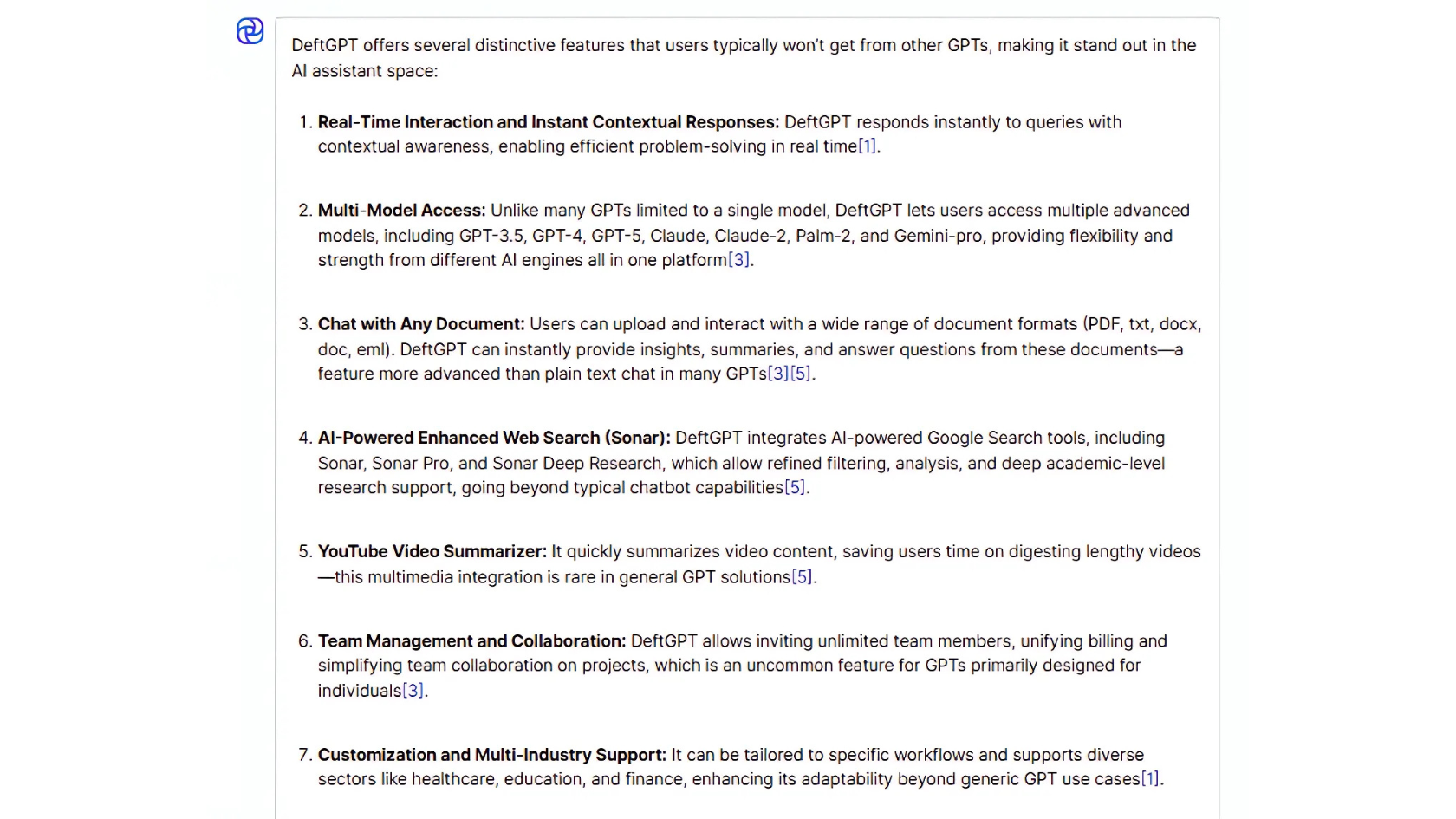
    Here’s where DeftGPT sets itself apart: it’s not just an image generator. It’s a complete AI productivity platform. That means while you’re creating visuals, you also get access to:

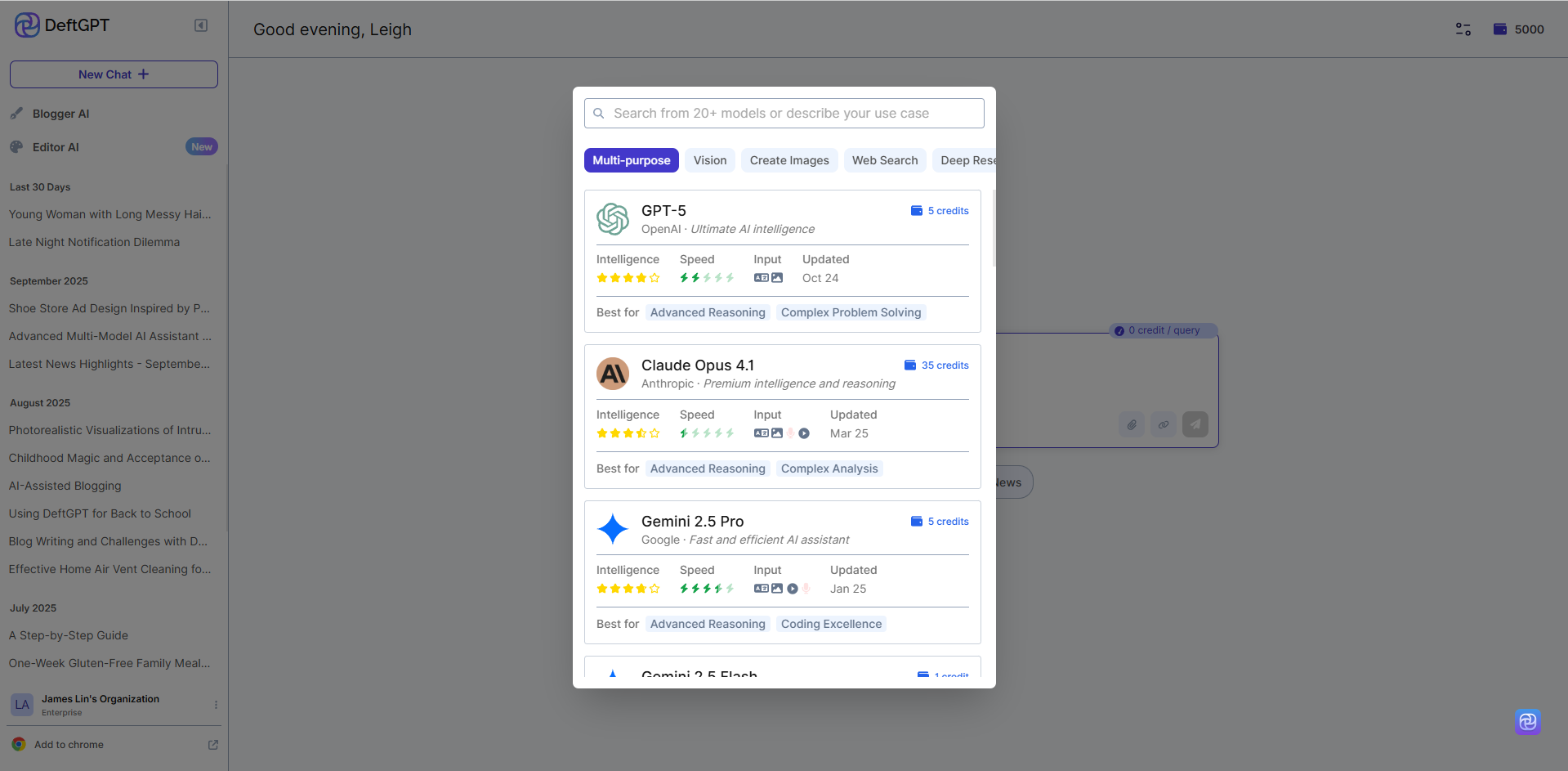
    Multi-Model Access: Use GPT-3.5, GPT-4, GPT-5, Claude, Gemini, and more.
    Document Chat: Upload PDFs, Word docs, Excel files, or emails and ask questions.

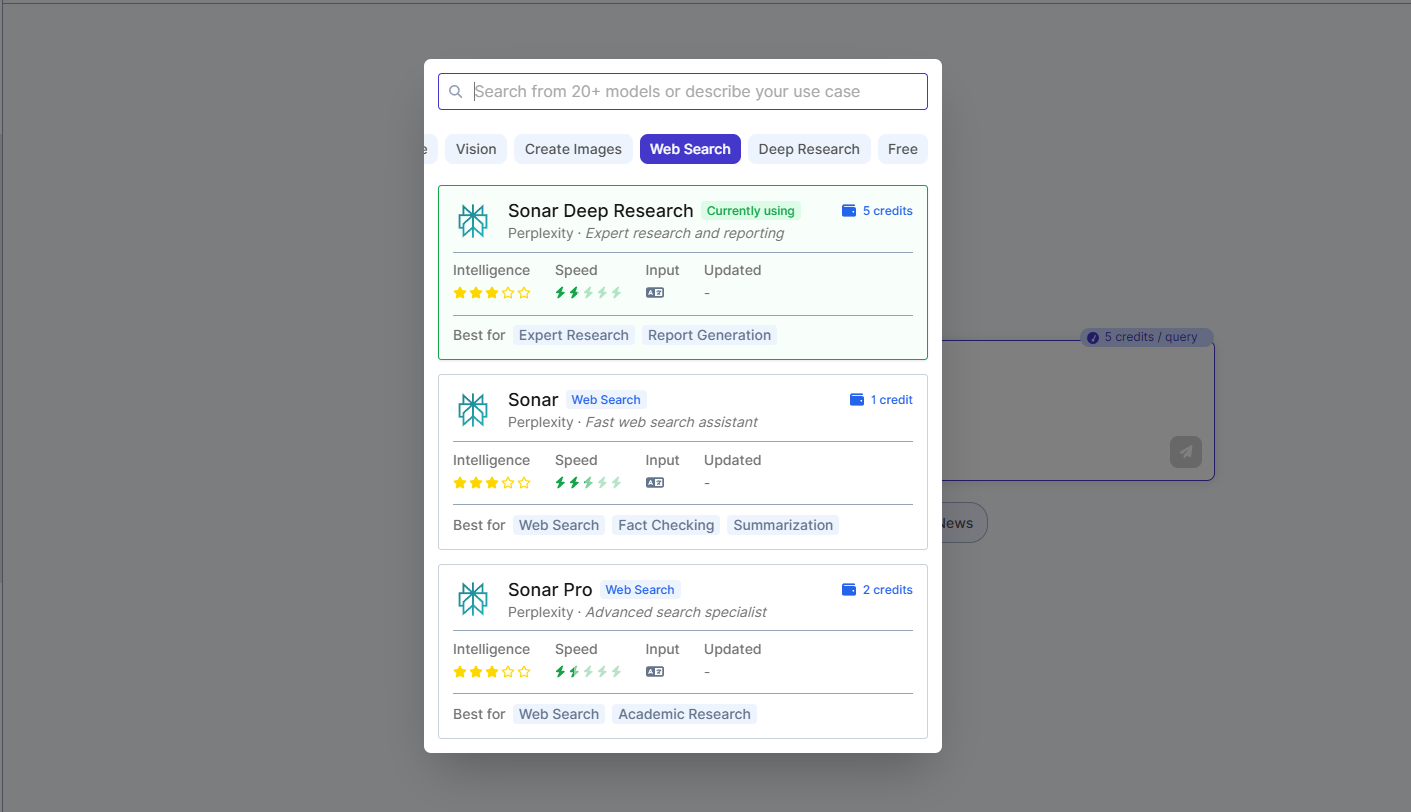
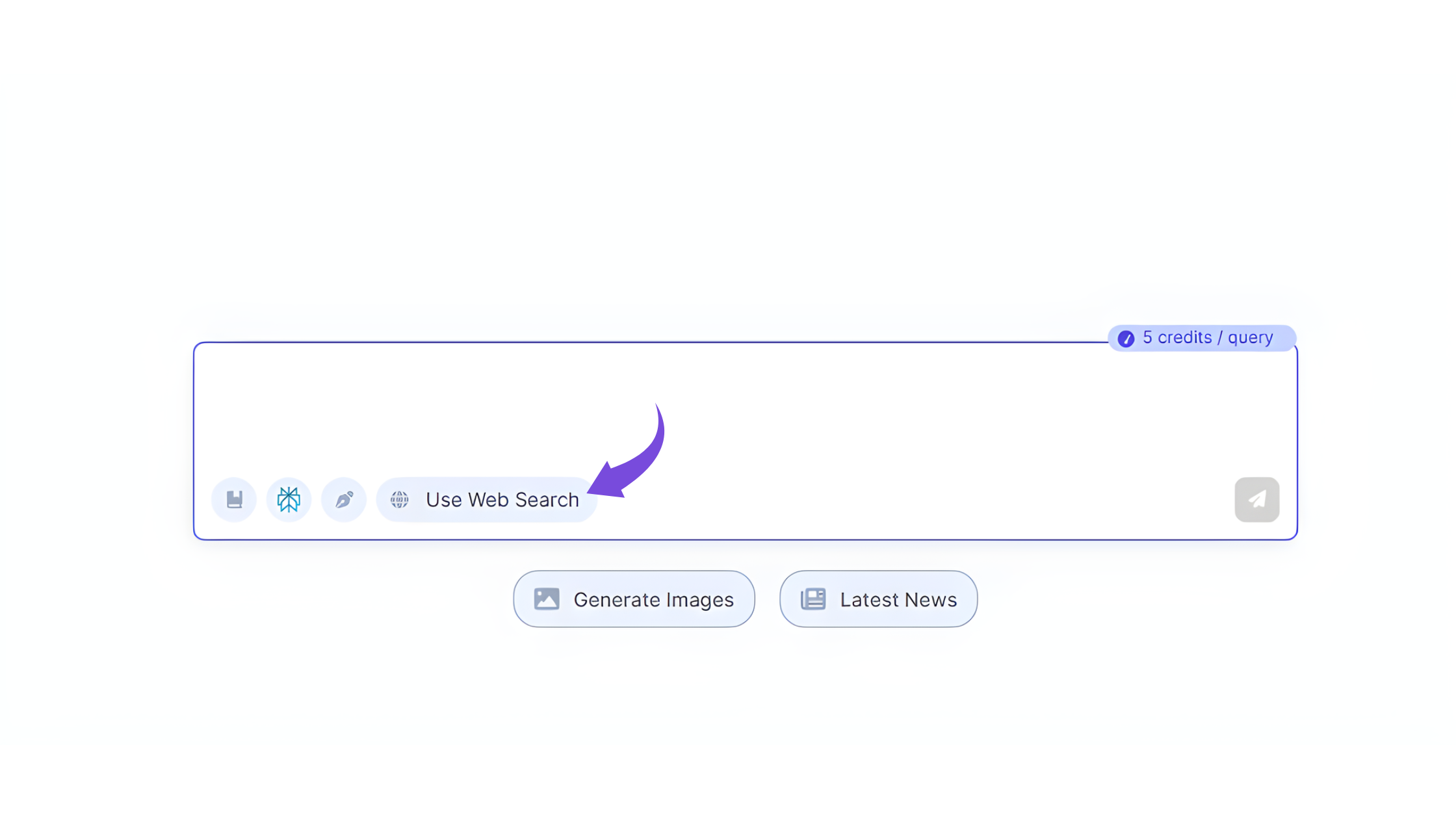
    AI-Powered Research: Use DeftGPT Sonar for academic-level Google searches.
    Video Summaries: Get quick summaries of long YouTube videos.

    Team Collaboration: Share projects, unify billing, and manage teams with ease.

    So whether you’re creating a marketing campaign, writing a blog, or analyzing a business report, DeftGPT gives you everything in one place.

    Try it for yourself! Head over to deftgpt.com and start turning your ideas into reality.

    Read next: Is SuperGrok Worth It? Features, Benefits, Limitations, and Why DeftGPT Is a Smarter Choice
  • Flux AI in 2025: Top Competitors, Alternatives, and How DeftGPT Lets You Access Them All

    Flux AI in 2025: Top Competitors, Alternatives, and How DeftGPT Lets You Access Them All

    The world of AI image generation in 2025 is growing faster than ever. Among the top players is Flux.1 AI, known for its powerful models and ability to turn text prompts into vivid, high-quality visuals. For creators, marketers, and designers, Flux AI is an impressive option.

    Its biggest strength lies in variety. Flux AI offers different models to suit multiple styles, whether you need realistic photography, sleek product renders, or stylized digital art. This flexibility makes it appealing for both professionals and hobbyists exploring creative workflows.

    But while Flux AI is strong, it’s not the only choice. In fact, if you’re looking for the best AI image generator in 2025, it’s worth comparing Flux AI with its competitors, and discovering why DeftGPT’s Canvas.ai is the smarter alternative that resolves many of their limitations.

    Top Flux AI Competitors and Their Limitations

    MidJourney

    MidJourney is renowned for its artistic flair. Its outputs often look like fine art or high-concept illustrations, making it a favorite for creatives who want unique, visually striking results.

    A major downside though is MidJourney is locked behind Discord, which can be confusing for beginners and inefficient for business users. Its pricing is subscription-based, with no free option, and it lacks deep integration with productivity tools.

    Stable Diffusion

    Stable Diffusion is the most customizable option. It’s open-source, with countless community-made models and the flexibility to fine-tune results. Developers and advanced users love its freedom.

    But that same flexibility makes it complex for casual users. It requires technical setup, powerful hardware (if run locally), or third-party apps that aren’t always reliable. Beginners often struggle to get polished results without significant trial and error.

    DALL·E

    DALL·E (from OpenAI) was one of the first AI image generators to go mainstream. Its simplicity makes it easy to use, and it’s good for quick creative ideas, playful outputs, or concept visualization.

    The downside though is, while easy to use, DALL·E can feel limited in detail and style variety compared to newer models. It also doesn’t integrate with wider productivity tools, meaning you have to generate your text and visuals separately.

    Why Canvas.ai by DeftGPT is the Best Flux AI Alternative

    While Flux AI, MidJourney, Stable Diffusion, and DALL·E all offer strong image generation features, they share one limitation: they only focus on visuals.

    Here’s why Canvas.ai is the smarter choice:

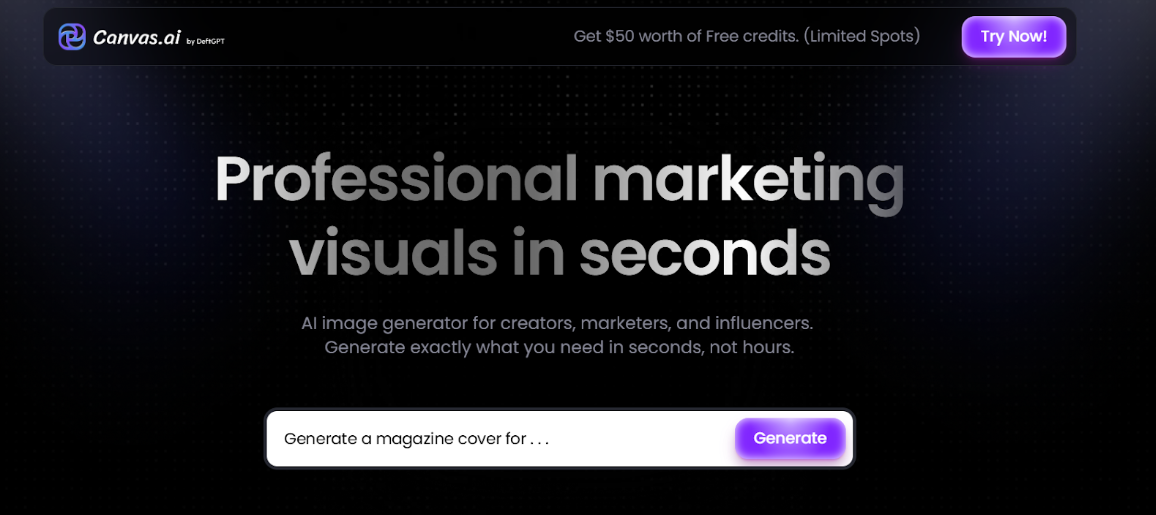
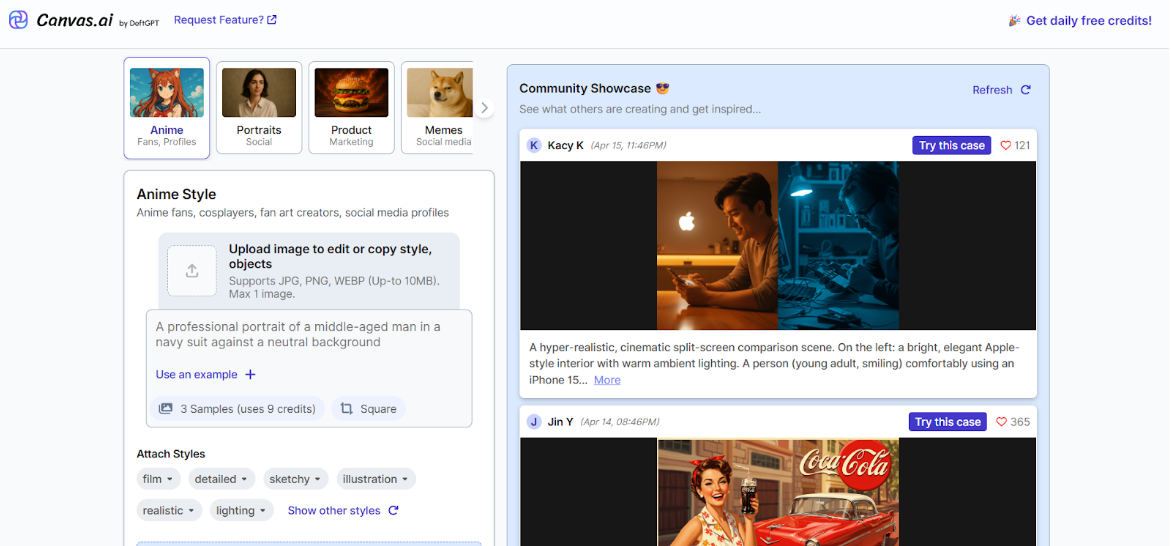
    • Multiple Image Models: Like Flux AI, Canvas.ai offers access to different models for a wide range of styles from realistic photography to imaginative illustrations.
    • Seamless Integration with DeftGPT: You can generate blog posts, ad copy, or captions using DeftGPT, then instantly pair them with visuals from Canvas.ai.
    • Productivity + Creativity in One Platform: Instead of jumping between apps, you can brainstorm, write, and design without leaving DeftGPT.
    • User-Friendly Interface: Designed for both beginners and advanced users, making high-quality image generation accessible to all.

    This makes Canvas.ai not just a tool for generating images, but a complete AI workspace for marketers, students, businesses, and creatives alike.

    The Verdict: Best AI Image Generator for 2025

    Flux AI deserves recognition as a powerful player in AI art, but when compared with its competitors, the limitations become clear: MidJourney is stuck in Discord, Stable Diffusion is too technical for casual users, and DALL·E lacks depth and integration.

    Canvas.ai by DeftGPT solves all of these issues by combining the best features of its competitors with the ease of an all-in-one platform. If you want the best AI image generator in 2025, along with tools that elevate your entire creative process, Canvas.ai is the smarter choice.

    With Canvas.ai, you’re not just generating images you’re building campaigns, writing content, and powering your creativity from a single AI-driven platform.

    See for yourself and experience the magic of AI Image Generation at canvasai.deftgpt.com 

    Read next: Is SuperGrok Worth it? Feature, Benefits, Limitations and Why DeftGPT Is a Smarter Choice

  • Is SuperGrok Worth It? Features, Benefits, Limitations, and Why DeftGPT Is a Smarter Choice
    Is SuperGrok Worth It? Features, Benefits, Limitations, and Why DeftGPT Is a Smarter Choice
    AI assistants are no longer just futuristic ideas, they’re everyday tools shaping how we study, work, and create. From writing school papers to summarizing research, from brainstorming content ideas to helping teams collaborate, the right AI can save you hours and unlock new productivity levels.

    In the middle of this AI race, one name that’s been making waves is SuperGrok. Marketed as a witty, personality-driven chatbot, SuperGrok is designed to stand out from traditional assistants like ChatGPT and Claude. But here’s the question most users are asking: Is SuperGrok really worth it, or is it just hype?

    The truth is, while SuperGrok shines in fun, casual conversations, it falls short when it comes to serious productivity and advanced features. And that’s where DeftGPT enters the picture.

    In this post, we’ll look at what SuperGrok can and can’t do, then explore why DeftGPT has become the smarter choice for students, professionals, and organizations that want more than just casual conversations.


    What Is SuperGrok?

    SuperGrok is an AI chatbot designed to make conversations engaging and fun. It’s personality-driven and often leans into humor while answering queries. For casual use, it can be entertaining and accessible.

    But when it comes to serious productivity tools, handling documents, research, or team collaboration, it falls short compared to more advanced AI assistants.

    Benefits of SuperGrok

    • Fun, personality-rich conversations.
    • Good for casual brainstorming and Q&A.
    • Easy to use for general queries.

    Limitations of SuperGrok

    While SuperGrok has charm, its limitations make it less practical for professional or academic users:

    • No Document Interaction – Can’t upload, analyze, or summarize PDFs, Word, or Excel files.
    • Single-Model Restriction – Unlike advanced platforms, it’s tied to one model.
    • Weak Research Capabilities – Lacks deep academic and web search support.
    • No Team Features – Designed mainly for individuals, not businesses or groups.
    • Minimal Customization – Can’t be tailored to industry-specific workflows.

    Why DeftGPT Is the Smarter Choice

    Unlike SuperGrok, DeftGPT is a productivity-first AI platform that goes beyond casual chat. Here’s what makes it stand out:

    1. Real-Time Contextual Responses

    DeftGPT remembers context across your conversation, so you don’t have to repeat yourself. It adapts as you go, making it faster and smarter at solving problems. Example: Paste part of an essay, ask for editing, then say “make it friendlier.” DeftGPT knows you mean the same essay, it keeps track automatically.

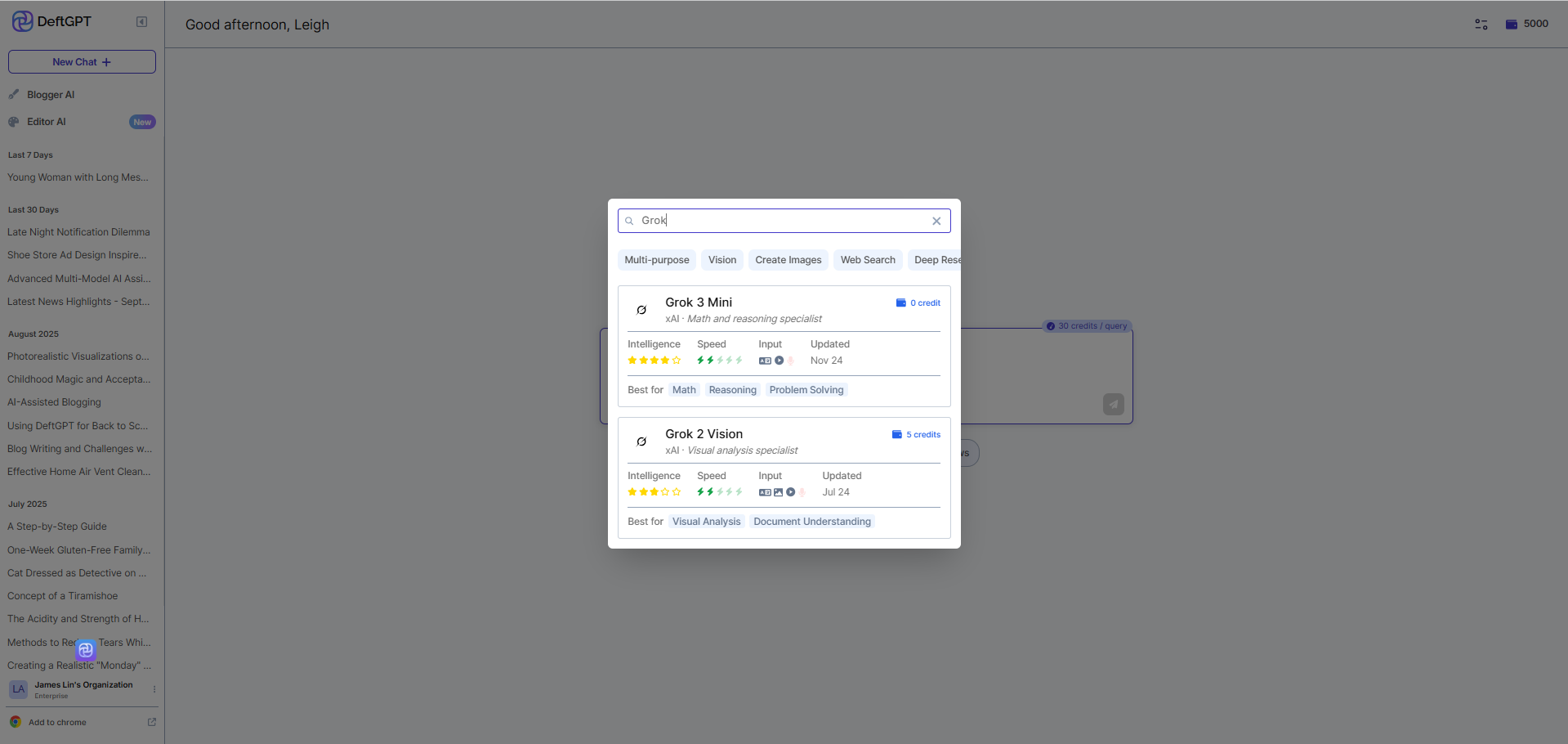
    Right now, we offer Grok 3 Mini and Grok 2 Vision, and we’re excited to hopefully add SuperGrok soon! Aside from Grok, DeftGPT also gives you access to other powerful models like DeepSeek V3, GPT-4o mini, Gemini 2.0 Flash, and more, so you always have the right AI for the task.

    2. Multi-Model Access

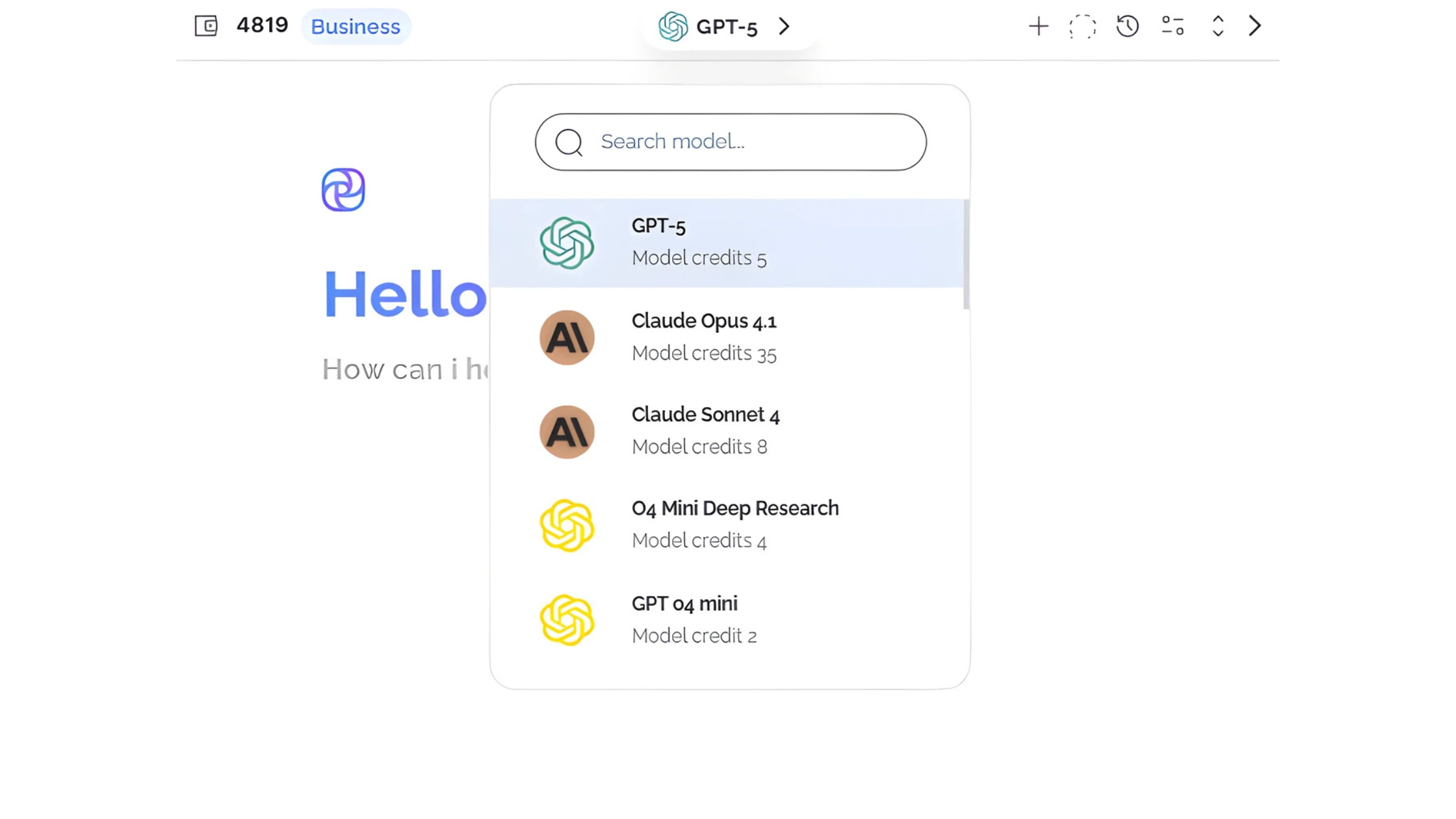
    While Grok is tied to one engine, DeftGPT gives you multiple models in one place: GPT-3.5, GPT-4, GPT-5, Claude, Palm-2, Gemini Pro, and more.

    This means you can pick the best model for the task, fast and cheap for drafting, or powerful and precise for research.

    3. Chat with Any Document

    Upload PDFs, Word docs, Excel sheets, emails, or slides, and ask questions about them. DeftGPT can summarize, extract data, or answer queries directly from your files.

    Example: Upload a 40-page report and ask: “What are the top three risks and opportunities here?” DeftGPT condenses it instantly.

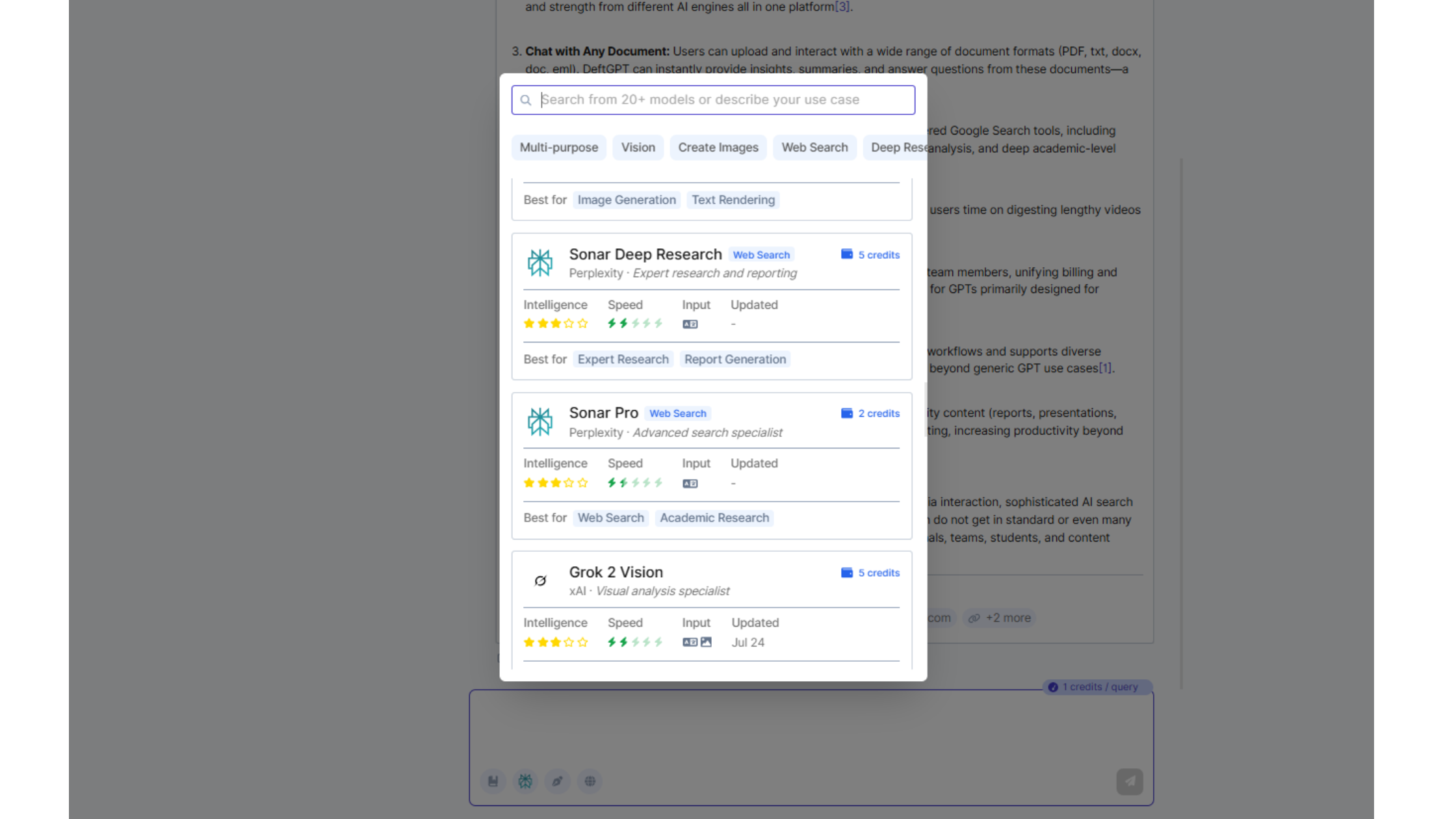
    4. AI-Powered Web Search (Sonar and other AI models)

    Unlike Grok, DeftGPT integrates AI-enhanced search for refined, reliable research. It filters noise, analyzes results, and provides source-backed answers.

    Perfect for students writing papers, marketers doing industry research, or executives needing quick insights.

    5. YouTube Video Summarizer

    Instead of watching a 90-minute lecture or webinar, DeftGPT can generate a summary with timestamps and key points in minutes.

    Great for busy learners, content creators, or professionals staying ahead on industry updates.


    SuperGrok vs. DeftGPT: The Verdict

    When it comes to choosing between SuperGrok and DeftGPT, it really depends on what you need from an AI assistant.

    • SuperGrok shines if your main goal is entertainment, casual chatting, or having a quirky digital companion. It’s designed to be fun, witty, and engaging, but that’s also where its value ends. If you’re a student who just wants quick trivia or someone looking for light brainstorming, SuperGrok can do the job.
    • DeftGPT, on the other hand, is built for people who need AI that works as more than just a chatbot. It’s a multi-functional, professional-grade platform that combines productivity, research, and collaboration in one place. Unlike Grok, DeftGPT doesn’t just talk, it helps you work smarter, faster, and with better results.

    If you’re only looking for light entertainment, SuperGrok is fine. But if you need an AI that can handle serious work, research, and collaboration, DeftGPT is hands down the smarter choice.

    For students, professionals, and businesses who want to maximize AI’s full potential, DeftGPT delivers more value and flexibility than SuperGrok.

    Read next: ChatGPT-5 vs ChatGPT-4: Key Differences, New Features, and How DeftGPT Gives You Access

  • ChatGPT-5 vs ChatGPT-4: Key Differences, New Features, and How DeftGPT Gives You Access 

    ChatGPT-5 vs ChatGPT-4: Key Differences, New Features, and How DeftGPT Gives You Access 

    The artificial intelligence landscape has taken another significant leap forward with the release of ChatGPT-5. As users worldwide transition from ChatGPT-4 to this latest iteration, many are wondering: what exactly has changed, and is the upgrade worth it?

    After analyzing user experiences and technical improvements, we’ve compiled a comprehensive comparison to help you understand the key differences between these two AI powerhouses and how DeftGPT can give you access to these major improvements.

    GPT-5 stomps GPT-4 in accuracy

    Perhaps the most significant improvement in ChatGPT-5 is its dramatically enhanced accuracy and reliability. The new model boasts a 40% lower rate of “hallucinations” compared to ChatGPT-4, meaning it’s far less likely to generate false or erroneous information. Additionally, ChatGPT-5’s responses are 45% less likely to include factual errors.

    This improvement addresses one of the most persistent criticisms of earlier AI models. For 

    professionals, researchers, and anyone relying on AI for factual information, this enhanced reliability represents a game-changing upgrade.

    A Unified, Intelligent Architecture for GPT-5

    One of ChatGPT-5’s most innovative features is its unified model architecture. Unlike ChatGPT-4, which requires users to manually select between different models for different tasks, ChatGPT-5 automatically switches between fast and deep thinking modes based on your specific needs.

    This intelligent switching means you no longer need to decide whether to use a quick response model or a more thorough analysis model – ChatGPT-5 makes that decision for you, optimizing both speed and depth depending on the complexity of your request.

    GPT-5 providing Enhanced Real-World Capabilities

    ChatGPT-5 introduces several practical improvements that make it more capable in real-world applications:

    • Sustained Memory: The new model can maintain context and memory over much longer sessions, making it ideal for extended projects and complex problem-solving tasks.
    • Native Multimodal Reasoning: ChatGPT-5 offers improved image and text reasoning capabilities, processing multiple types of input more seamlessly than its predecessor.
    • Autonomous Task Execution: Unlike ChatGPT-4, the latest version aims to enable more autonomous task completion, requiring less hand-holding from users.
    • Human-like Interaction: The model delivers more natural, human-like conversation flows, making interactions feel less robotic and more intuitive.

    in Creativity arms race, GPT-4 takes the lead

    While ChatGPT-5 excels in accuracy and logical reasoning, this focus comes with some trade-offs. Many users have noted that in creative and emotional contexts, ChatGPT-5’s responses can be shorter and less nuanced compared to ChatGPT-4.

    The new model tends to produce more direct, sterile responses, which some users find less engaging for creative writing, brainstorming, or emotionally nuanced conversations. This represents a clear design choice by OpenAI to prioritize accuracy and reliability over expressive creativity.

    ChatGPT-4’s Style:

    • Longer, more elaborate responses
    • Rich use of metaphors and descriptive language
    • More “personality” in its writing voice
    • Willing to explore creative tangents and possibilities
    • Often provided multiple perspectives or approaches

    ChatGPT-5’s Style:

    • More concise, to-the-point responses
    • Cleaner, more clinical language
    • Less “conversational filler” or stylistic flourishes
    • More focused on direct answers
    • Less likely to embellish or elaborate unless specifically asked

    GPT-5’s Ease of Access and Availability

    OpenAI has made ChatGPT-5 the default model for all users, indicating their confidence in the upgrade. However, recognizing that some users prefer ChatGPT-4’s more expressive style, paid users (Plus, Business, and Pro subscribers) still have access to GPT-4o through the Legacy models section.

    This approach allows users to choose the model that best fits their specific needs and preference. 

    But how can DeftGPT provide you access to all this, and more?

    DeftGPT: Access GPT-5’s Power Plus Features You Won’t Find Anywhere Else

    The release of GPT-5 has transformed the AI landscape, but what if you could harness all of GPT-5’s revolutionary capabilities while unlocking additional features that make your AI experience even more powerful?

    That’s exactly what DeftGPT delivers – full access to OpenAI’s cutting-edge GPT-5 model, enhanced with innovative features designed to supercharge your productivity, creativity, and workflow efficiency.


    Real-World Applications Where DeftGPT Excels

    For Content Creators and Marketers

    Leverage GPT-5’s enhanced reasoning capabilities through DeftGPT’s creative templates and optimization tools to produce content that’s both factually sound and engaging – bridging the gap between GPT-5’s precision and creative needs.

    For Researchers and Academics

    Utilize GPT-5’s reduced hallucination rate alongside DeftGPT’s citation tracking and reference management features to conduct more reliable research with proper attribution and fact-checking workflows.

    For Small Business Owners

    Access GPT-5’s autonomous task execution capabilities through DeftGPT’s business-focused templates and integration tools to automate routine tasks, generate marketing materials, and streamline operations.

    The Future of AI-Powered Productivity

    GPT-5 represents a major leap forward in AI capability, but raw capability alone isn’t enough. DeftGPT transforms that capability into practical value by providing the tools, integrations, and optimizations that make GPT-5 truly powerful for real-world applications.

    Try DeftGPT now and experience the revolutionary advancements of AI and more.

    Read next: DeftGPT Blogger AI Tool: Blog Writing Made Easy Simple and Fast